Best Ski Goggles for Night: The Definitive Editorial Guide to Low-Light Optics
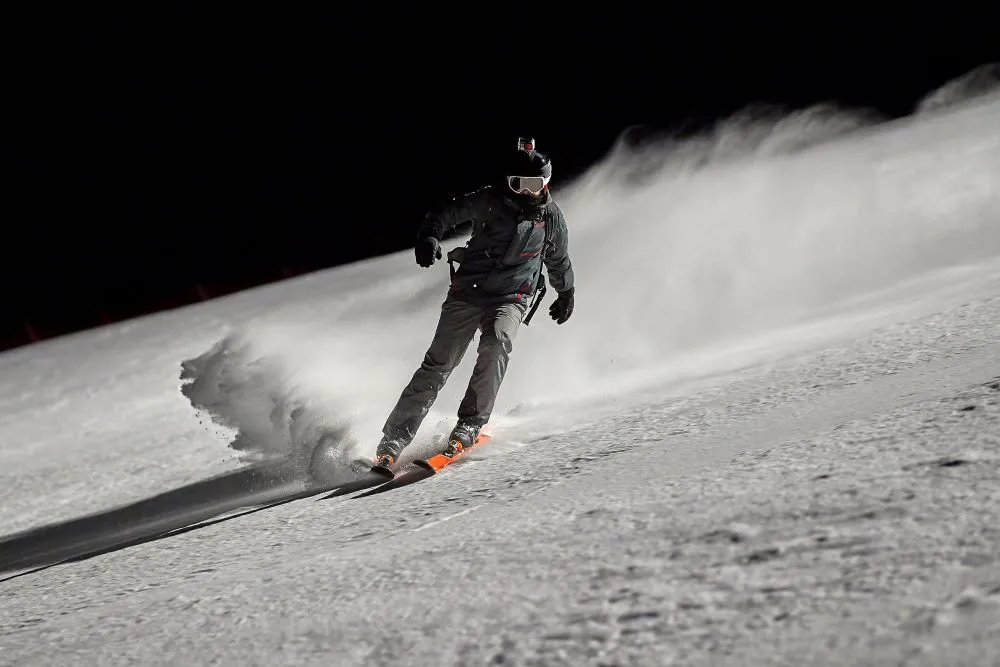
The transition from daylight to artificial illumination on the mountain introduces a specialised set of optical challenges that standard eyewear is ill-equipped to handle. While most alpine enthusiasts focus on mitigating high-altitude ultraviolet radiation and glare, the nocturnal environment requires a shift toward light maximisation and contrast enhancement. In these conditions, the primary objective is no longer protection from an abundance of light, but rather the precise management of a scarce resource. The physics of how a lens interacts with the monochromatic or sodium-vapour light typical of resort floodlights is fundamentally different from how it processes the broad-spectrum light of a clear afternoon.
Technically, the efficacy of eyewear in low-light scenarios is dictated by Visible Light Transmission (VLT). Most daytime lenses occupy the 10% to 25% VLT range, effectively acting as shutters. For night operations, this threshold must shift dramatically toward the 60% to 90% range. However, simply choosing a clear lens is often a reductive strategy. While a clear lens offers the highest VLT, it provides zero contrast enhancement, leaving the skier unable to distinguish between a firm groomer and a dangerous patch of “blue ice.” The superior solution lies in high-transmission tints that utilise specific wavelengths to define the topography of the snow under artificial lights.
Furthermore, the mechanical demands of the nocturnal environment are unique. Temperature inversions often lead to higher humidity levels near the snow surface at night, which, when combined with the heat generated by the skier’s face, creates a high-risk environment for fogging. A lens that performs perfectly at noon may fail at 8:00 PM due to insufficient thermal venting or a breakdown in the anti-fog coating’s chemical integrity. Understanding these variables is essential for anyone seeking a definitive reference on how to maintain optical clarity when the sun disappears.
Understanding “best ski goggles for night”
To define what constitutes the best ski goggles for night, one must move beyond the marketing nomenclature and analyse the interaction between photonics and physiology. The human eye operates differently in “scotopic” (low light) conditions than it does in “photopic” (bright light) conditions. At night, we rely more heavily on rods than cones, which significantly reduces our ability to perceive colour but increases our sensitivity to motion and contrast. Therefore, a night-specific lens must act as a signal amplifier rather than a filter.
A common misunderstanding is the assumption that any “light” lens is sufficient. In reality, the artificial lighting used at ski resorts often has a specific spectral output—typically leaning toward the yellow or orange end of the spectrum. A lens that is tuned to these specific wavelengths can heighten the shadows in the snow’s texture, providing a three-dimensional view of the terrain that a simple,e clear lens would flatten. The risk of oversimplification here is high; many skiers believe that “clear is king,” failing to realise that a subtle yellow, rose, or light blue tint can actually provide better depth perception under stadium lights.
The analysis of these systems requires looking at:
-
The VLT Quotient: Balancing light volume against the need for a protective barrier.
-
The Refractive Index: How the lens material handles the “flare” from high-intensity floodlights.
-
The Thermal Barrier: The efficacy of the double-lens seal in preventing condensation during rapid temperature drops.
Historical and Systemic Evolution of Low-Light Optics
The evolution of night-skiing eyewear tracks with the development of resort infrastructure. In the early era of the sport, night skiing was a primitive affair with limited visibility, often utilising industrial work lights that created harsh shadows and significant “black zones.” Eyewear was secondary, typically consisting of rudimentary glass or early plastic lenses that offered little in the way of specialised tints.
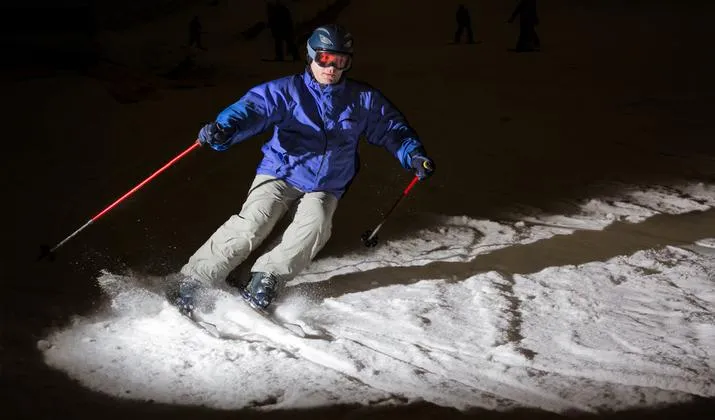
The systemic breakthrough occurred with the advent of high-contrast tint technology in the 1980s and 90s. Manufacturers began experimenting with “High Intensity” (HI) tints, specifically yellow and persimmon, which were designed to filter out blue light. Because blue light has a shorter wavelength and scatters more easily, filtering it out reduces “noise” and sharpens the edges of shadows. More recently, the industry has shifted toward proprietary “colour-tuning” technologies—such as Oakley’s Prizm or Smith’s ChromaPop—which use refined dyes to isolate and enhance specific parts of the colour spectrum, even in VLT ranges as high as 70%.
Conceptual Frameworks and Optical Mental Models
Navigating the market for night optics is best achieved through structured frameworks that prioritise environmental variables over brand loyalty.
1. The “Blue Light Scatter” Framework
This model views the atmosphere and the snow surface as a source of visual “clutter.” By using a lens that filters out the blue end of the spectrum (yellow or amber tints), the skier “cleans” the image. This is particularly effective under the older high-pressure sodium lights found at many traditional resorts.
2. The “Artificial Lumens” Mental Model
In this framework, the skier considers the power of the resort’s lighting system. On highly illuminated “stadium” runs, a VLT of 50-60% with a contrast-enhancing tint is superior. On dimly lit or “shadowy” trails, the model dictates a shift toward 80%+ VLT or clear lenses to maximise every available photon.
3. The “Thermal Bridge” Model
This evaluates the goggle as a climate-control system. The air trapped between the two layers of a dual-pane lens acts as an insulator. If this seal is compromised, or if the “bridge” is too thin, the temperature differential between the skier’s face and the outside air will cause the internal lens to reach its dew point, resulting in catastrophic fogging.
Key Categories of Night-Specific Lenses
| Category | Primary Benefit | Significant Trade-off | Ideal Scenario |
| Clear (Non-Tinted) | Maximum VLT (85-95%); zero colour distortion. | Zero contrast enhancement; glare from floodlights. | Darkest conditions; wooded trails. |
| High-Transmission Yellow | Exceptional contrast; filters blue light. | Can feel overly “bright” or artificial to some eyes. | Classic resort floodlighting. |
| Light Rose/Pink | Enhances depth perception in flat light. | Lower VLT than clear or yellow; less effective in deep dark. | Twilight/Dusk and transition periods. |
| Photochromic (Low-Range) | Adjusts from 20% to 80% VLT automatically. | Slower reaction time in extreme cold; expensive. | Variable lighting; long evening sessions. |
| Light Blue/Vivid | Reduces glare from white LED lighting. | Less contrast in yellow-tinted lighting environments. | Modern LED-lit resorts. |
Detailed Real-World Scenarios
Scenario A: The “LED Transition”
-
Context: A resort upgrades from old yellow sodium lights to crisp, white LED stadium lights.
-
Failure Mode: A skier continues using a dark amber lens, which was great for the old lights but now feels “muddy” and dark under the high-kelvin LEDs.
-
Decision Point: Transitioning to a light blue or high-VLT rose lens, which preserves the “crispness” of the LED light while still defining the snow’s texture.
Scenario B: The “Humidity Trap”
-
Context: A high-output skier is doing “laps” on a humid night where the temperature is hovering near freezing.
-
The Mechanism: The skier stops at the bottom, and the lack of airflow allows steam from the face to saturate the goggle’s foam and move into the lens cavity.
-
The Result: Flash-fogging that freezes upon the next descent.
-
Correction: Utilising a goggle with an integrated fan system or oversized “ram-air” vents to force moisture out even at low speeds.
Planning, Cost, and Resource Dynamics
The acquisition of night-specific gear involves a trade-off between “Dedicated” and “Interchangeable” systems.
| Resource Item | Price Range | Lifecycle | Strategic Value |
| Replacement Night Lens | $40 – $110 | 2-4 Seasons | High: allows use of the existing frame. |
| Dedicated Night Goggle | $60 – $180 | 5-7 Seasons | Highest; prevents wear on “day” foam. |
| Photochromic System | $180 – $320 | 3-5 Seasons | High convenience; requires careful storage. |
| Anti-Fog Treatment | $10 – $20 | Weekly/Monthly | Essential maintenance for all systems. |
Opportunity Cost: Attempting to use a “All-Conditions” lens (typically 25-35% VLT) for night skiing is a high-cost mistake. While it saves $100 upfront, the reduction in safety and the inability to “read” the snow lead to a significantly degraded experience and a higher probability of injury.
Tools, Strategies, and Support Systems
The best ski goggles for night must be supported by a broader ecosystem of gear and habits.
-
Magnetic Lens Swapping: Allows for a 5-second transition when the sun dips behind the ridge, preventing the need to carry a second pair of goggles.
-
Anti-Fog “Cat Crap” or Sprays: A secondary chemical barrier that breaks the surface tension of water droplets.
-
Hard-Shell Storage: Night lenses are often “clearer” and show scratches more easily; they must be stored in a rigid case, never loose in a pocket.
-
Helmet Integration: Ensuring the “brim” of the helmet doesn’t block the top vents of the goggle, which is the primary cause of heat buildup.
-
Microfiber Management: Carrying a dry, clean cloth specifically for the inside of the lens, used only with a “dab” motion, never a wipe.
-
Peripheral Awareness Training: Night goggles often have a “taller” lens profile to compensate for the fact that we move our eyes more when we can’t see the periphery clearly.
Risk Landscape: Visual Distortion and Failure Modes
At night, the “Risk Margin” is compressed. Visual errors that are minor in the day become systemic failures in the dark.
-
“Ghosting” and Internal Reflection: Low-quality night lenses often reflect the resort lights off the back of the lens into the skier’s eye. This creates “phantom” images that can be disorienting at high speeds.
-
The “Flat Light” Hallucination: In certain lighting, the brain cannot distinguish between a 2-foot drop and a flat surface. This “sensory mismatch” is a leading cause of lower-leg injuries at night.
-
Coating Degradation: Most night lenses have a mirrored coating to reduce glare from floodlights. If this coating is scratched, it creates a “diffraction” pattern that makes it impossible to see when facing a light source.
Governance, Maintenance, and Long-Term Adaptation
A nocturnal eyewear strategy requires a “Monitoring and Review” cycle.
-
Monitoring Triggers: If the skier finds themselves “blinking” excessively or squinting under floodlights, the VLT is likely too low, or the contrast tint is mismatched to the light source.
-
Review Cycles: Every 10-night sessions, the goggle’s “Face Foam” should be inspected. At night, moisture is your enemy; compressed or “salty” foam holds water and will cause fogging.
-
Adaptation: As a skier ages, their “Pupillary Light Reflex” slows down. A skier in their 50s may require a higher VLT (clearer) lens than they did in their 20s to achieve the same level of safety.
Measurement, Tracking, and Evaluation
-
The “Shadow Definition” Test: On a familiar run, can the skier see the “tines” left by the grooming machine? If not, the contrast enhancement is insufficient.
-
The “Recovery Time” Metric: How long does it take for the eyes to adjust after looking directly at a floodlight tower? A high-quality lens will have “Anti-Glare” properties that reduce this recovery time.
-
Fog-Clearing Velocity: If the goggle fogs while standing, how many feet of movement are required to clear the lens? Elite goggles should clear within 20-30 feet of descent.
Common Misconceptions and Industry Myths
-
Myth: “Clear lenses are the only choice for night.”
-
Correction: While clear has the most light, it lacks contrast. A 70% VLT yellow lens is almost always safer for identifying terrain.
-
-
Myth: “Darker lenses are better for bright resort lights.”
-
Correction: Resort lights are bright at the source, but the snow remains in deep shadow. You need VLT to see the shadows, not to block the light.
-
-
Myth: “Expensive goggles don’t fog.”
-
Correction: Every goggle will fog if the moisture management (balaclava placement, venting) is handled incorrectly.
-
-
Myth: “You can use yellow lenses during the day, too.”
-
Correction: Yellow lenses provide zero UV protection in many cases and can cause “snow blindness” if used in full sun.
-
Ethical and Practical Considerations
There is a practical “Duty of Care” when skiing at night. Because visibility is limited for everyone, the ability to see others and be seen is paramount. High-VLT lenses not only help you see the terrain but also allow you to see the “movement signals” of other skiers more effectively. Furthermore, the longevity of night-skiing hardware is often greater thanthat of day gear because it isn’t subject to the same level of UV-induced plastic degradation.
Conclusion: The Precision of the Dark
The selection of the best ski goggles for night is a decision that impacts the fundamental safety and enjoyment of the alpine environment. When the sun sets, the mountain becomes a landscape of high-contrast anomalies and hidden textures. Navigating this successfully requires an optical system that doesn’t just “protect” the eyes, but actively translates a dim, artificial environment into a readable, three-dimensional map.
By prioritising VLT, contrast-enhancing tints, and rigorous moisture management, the skier ensures that their visual system remains an asset rather than a liability. The “definitive” choice is rarely the most expensive one; it is the one that most accurately matches the specific luminosity and temperature profile of the night air.